
Illuminating Deciphering 7 Surprising Fossil Colors and What They Reveal
These variations can make fossils visually spectacular, but their meaning is often misunderstood. A black fossil is not automatically older than a brown fossil, and an unusually colored specimen is not necessarily rarer simply because of its appearance.
Instead, many fossil colors reflect the complex geological environments in which prehistoric remains were buried and preserved. Minerals dissolved in groundwater, sediment composition,Illuminating oxygen availability,Illuminating chemical conditions, and later geological processes can all influence a fossil’s final appearance.
By Deciphering fossil colors, collectors and students can learn to see coloration as part of a fossil’s geological history rather than simply an aesthetic characteristic.
This guide explores seven surprising fossil colors, explains how they can develop, and examines what coloration can—and cannot—tell us about an ancient specimen.
1. Fossil Colors: Understanding Black Fossils
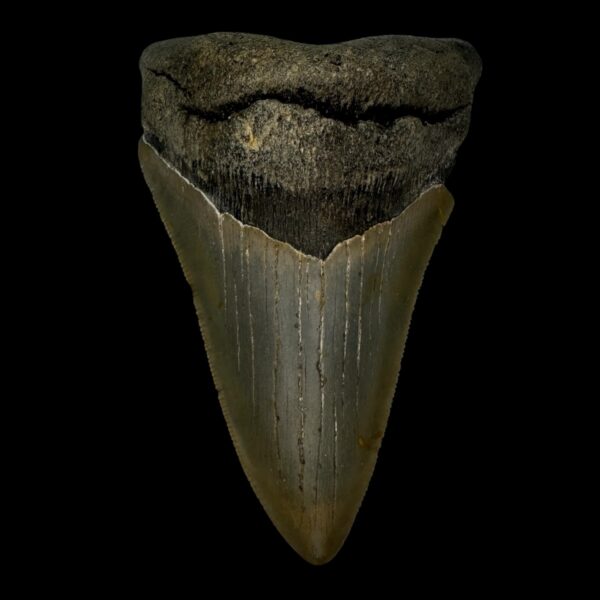
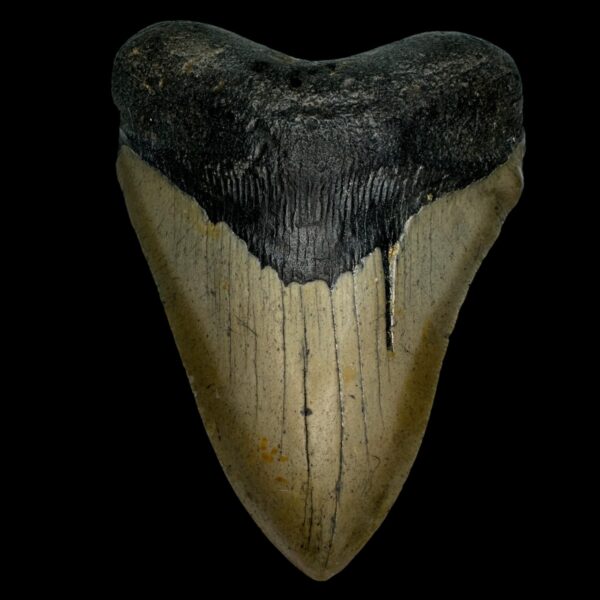
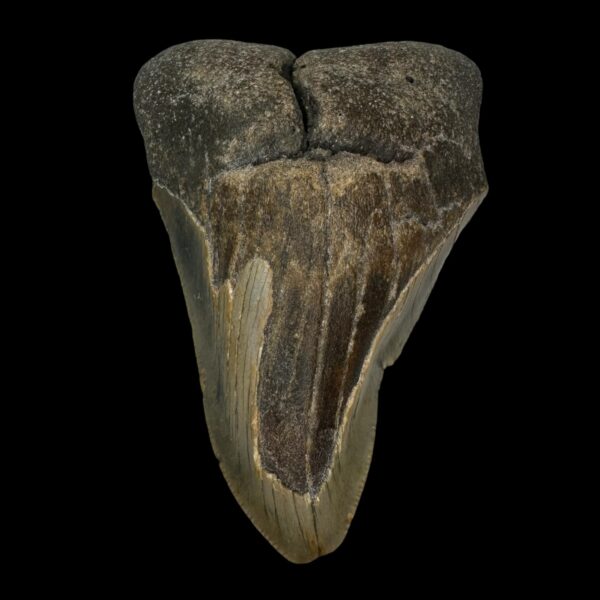
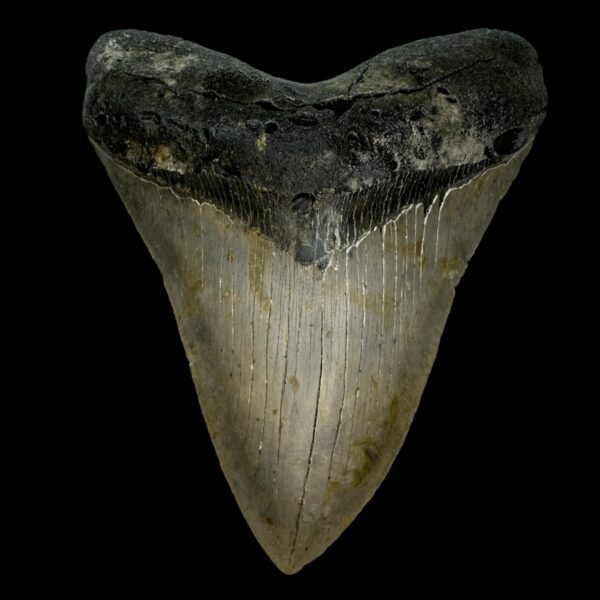
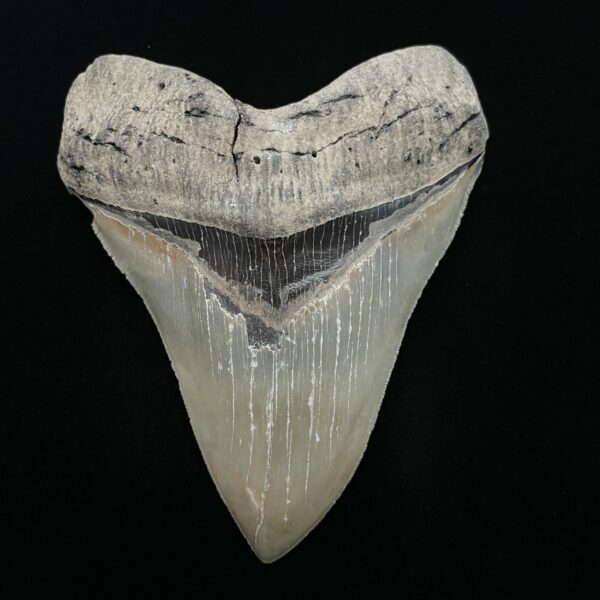
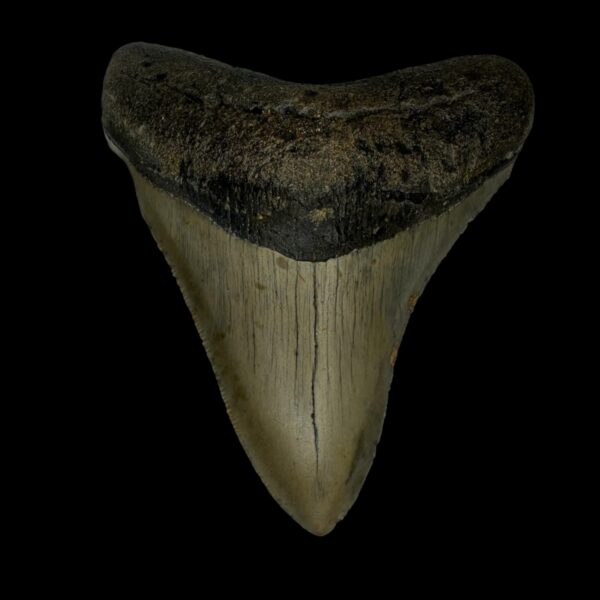
Black is one of the most recognizable fossil colors, particularly among fossil shark teeth. Megalodon teeth with dark crowns and roots are frequently encountered in collections, museums, and fossil deposits.
One common Illuminating misconception is that black fossils must be older than fossils displaying lighter colors. In reality, fossil coloration is strongly influenced by the chemical and mineral conditions surrounding the specimen during and after fossilization.
As buried biological material interacts with sediment and mineral-rich groundwater over geological time, its original composition can be altered. Minerals can enter microscopic spaces or become associated with the fossilized material, contributing to darker coloration.
Does Black Mean a Fossil Is Extremely Old?
Not necessarily. Geological age cannot be reliably determined from color alone.
Two fossils of approximately the same age can develop dramatically different appearances if they were preserved in different geological environments. Likewise, fossils separated by millions of years may display similar dark coloration when comparable mineral conditions were present.
Paleontologists instead rely on stratigraphy, geological formations, associated fossils, provenance, and appropriate dating techniques when determining fossil age.
2. Fossil Colors: Brown and Earth-Toned Fossils
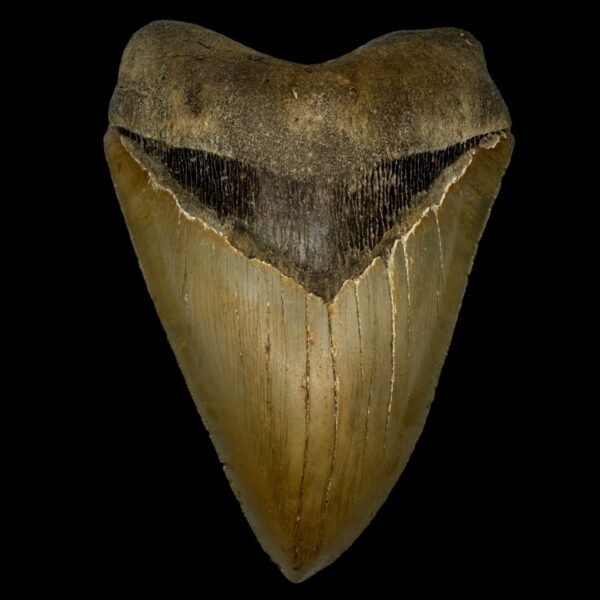
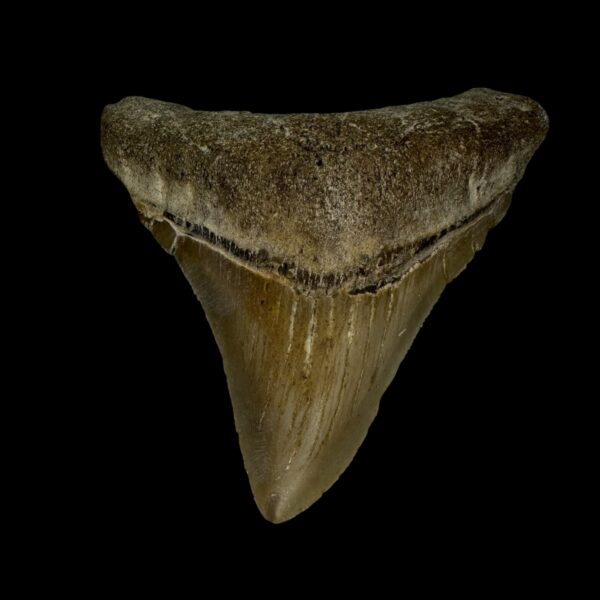
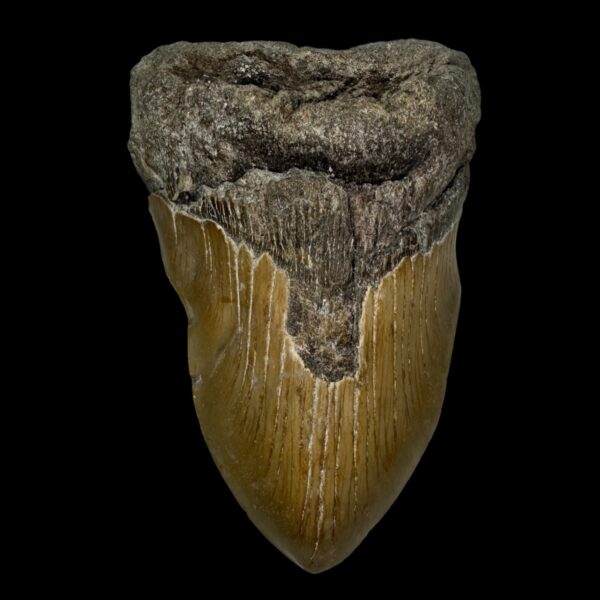
Brown, tan, amber-like, and other earth-toned fossil colors are common across many types of prehistoric specimens.
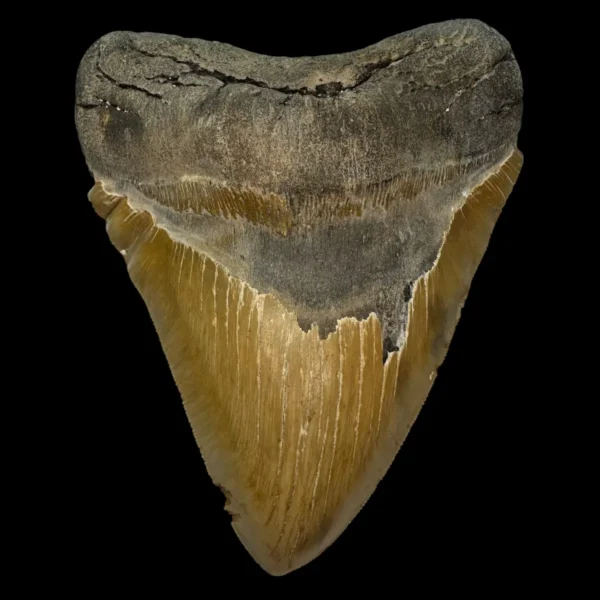
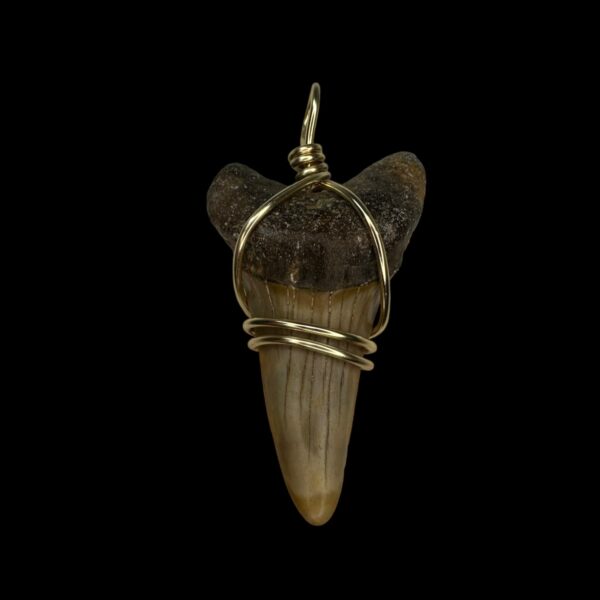
Fossil shark teeth can develop crowns ranging from pale tan to deep chocolate brown, while fossil bones and shells may display similar earthy tones.
These colors can reflect interactions between the fossil and minerals within surrounding sediments. Iron-bearing minerals and other compounds may contribute to brown coloration depending on their chemical state and depositional environment.
Why Can One Fossil Display Several Shades of Brown?
Mineralization does not necessarily occur uniformly throughout a fossil. Different areas of a specimen can vary in porosity, composition, exposure to groundwater, or contact with surrounding sediment.
As a result, natural gradients may form across the surface. A fossil shark tooth might have a lighter crown, darker root, or irregular bands of brown and tan.
These natural variations contribute to the distinctive appearance of individual specimens.
3. Fossil Colors: Gray and Blue-Gray Specimens
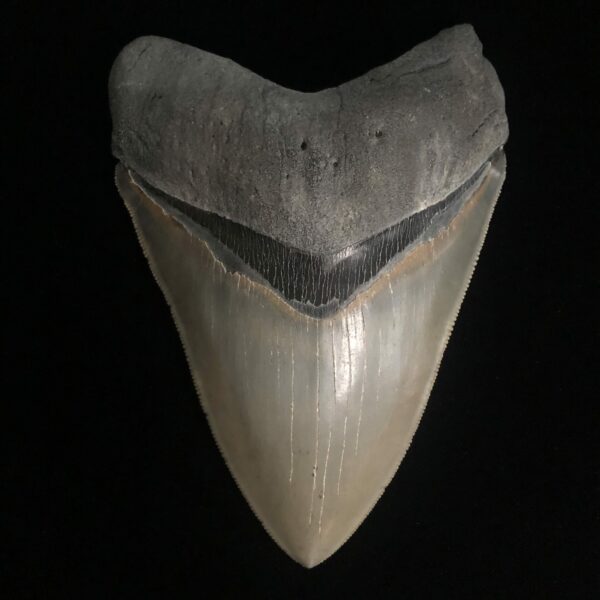
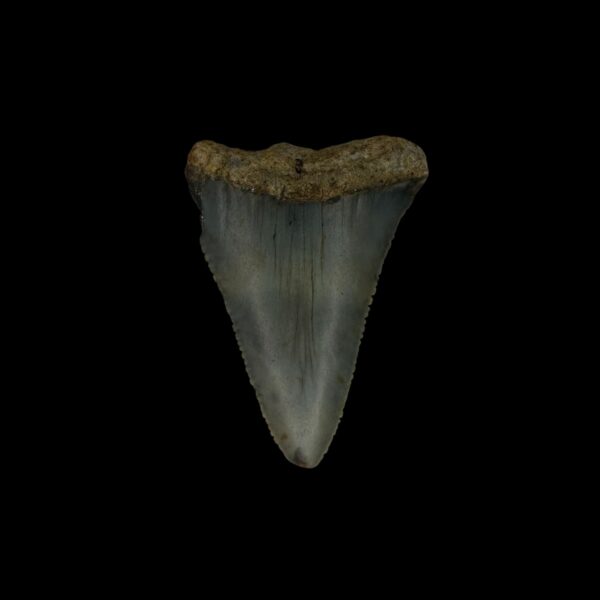
Gray and blue-gray fossil colors can create particularly striking specimens. Fossil shark teeth sometimes display subtle blue, slate, silver-gray, or blue-gray coloration across their crowns.
These tones can result from the mineral composition and chemical conditions of the sedimentary environment surrounding the fossil.
The smooth crown surfaces of fossil shark teeth can make these colors especially noticeable, particularly when a lighter crown contrasts with a darker root.
Can Authentic Fossils Naturally Be Blue?
Yes. Authentic fossils can naturally develop blue or blue-gray coloration.
However, collectors should avoid using color alone as evidence of authenticity. Modern replicas and altered specimens can also be artificially colored.
A reliable evaluation considers anatomy, surface texture, mineralization, provenance, preparation, geological context, and any documented restoration alongside color.
4. Fossil Colors: Red, Orange, and Rust Tones
Red, orange, and rust-colored fossil colors are another fascinating result of geological chemistry.
Iron-bearing minerals are commonly associated with reddish and orange coloration in sedimentary environments. Under certain chemical conditions, iron oxidation can produce the familiar warm tones observed in many rocks and fossils.
Fossils preserved within iron-rich sediments can therefore develop appearances dramatically different from specimens recovered from darker marine deposits.
What Can Red Fossil Colors Reveal?
Reddish coloration may provide clues about mineral conditions surrounding a fossil during its geological history. However, it should not be interpreted independently.
Scientists combine color observations with rock type, sedimentary structures, mineral composition, stratigraphy, and other geological evidence when reconstructing ancient environments.
The color provides one clue within a much larger scientific investigation.
5. Fossil Colors: Tan, Cream, and Light-Colored Fossils
Not every fossil becomes dark during fossilization. Tan, beige, cream, and pale gray are all possible natural fossil colors.
This is particularly important for beginning collectors because dark coloration is sometimes incorrectly treated as a requirement for fossil authenticity.
A light-colored fossil can still be millions of years old. Its appearance simply reflects the geological environment and mineral conditions associated with its preservation.
Can Light-Colored Fossils Be Authentic?
Absolutely. Authenticity should never be determined by darkness alone.
A naturally pale fossil may preserve excellent anatomical detail, genuine mineralization, and reliable geological provenance.
Likewise, a dark specimen is not automatically authentic simply because its coloration resembles other known fossils.
Understanding this distinction is essential when Deciphering fossil colors.
6. Fossil Colors: Multicolored and Patterned Specimens
Some of the most visually remarkable fossil colors occur when several tones appear within the same specimen.
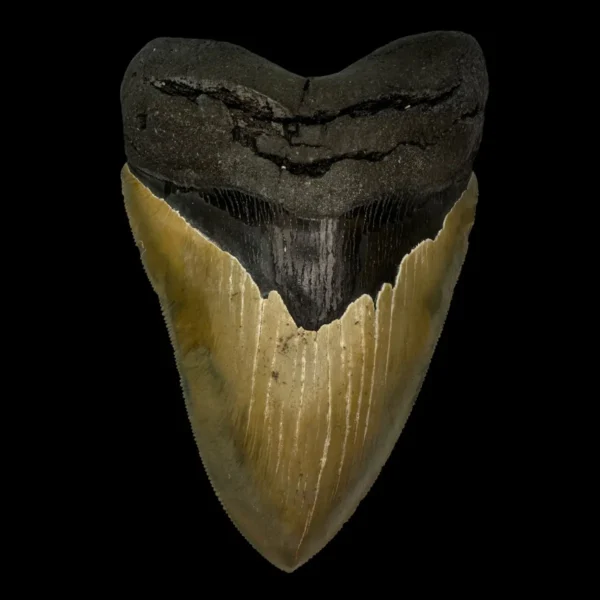
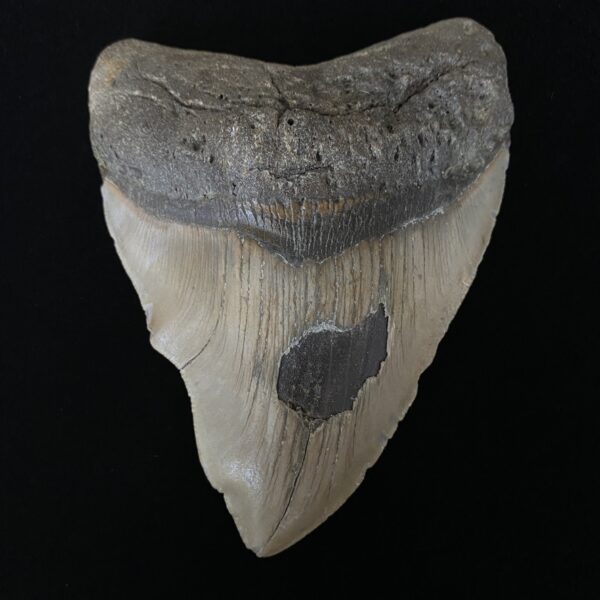
A Megalodon tooth might display a gray crown, dark root, brown bourlette, lighter mineral bands, or irregular patches of contrasting coloration.
Other fossils may contain veins, spots, gradients, streaks, and natural mineral patterns.
How Do Multicolored Fossils Develop?
Fossilization is not a single instantaneous event. A specimen can remain within geological deposits for millions of years while groundwater, minerals, pressure, erosion, and other processes continue affecting it.
Groundwater chemistry can also change through time. Different minerals may interact with different areas of a fossil, creating variations in color and texture.
Because these geological processes are highly variable, even fossils discovered within the same general formation can display noticeably different appearances.
Why Collectors Appreciate Natural Patterns
Distinctive natural coloration can make an individual fossil visually unique.
Collectors may appreciate dramatic mineral patterns alongside other characteristics such as size, preservation, serrations, completeness, rarity, and provenance.
However, attractive fossil colors should remain one factor within a broader evaluation of the specimen.
7. Fossil Colors: Original Color Versus Fossilized Color
Perhaps the most important concept when studying fossil colors is the distinction between the appearance of a fossil today and the original appearance of the organism when it was alive.
A black Megalodon tooth does not demonstrate that Megalodon originally possessed black teeth. Similarly, a reddish fossil bone does not necessarily mean the animal had red bones.
Much of the coloration visible today developed through geological and chemical processes occurring after burial.
What Happens During Fossilization?
After an organism dies, rapid burial can protect some of its remains from complete destruction. Over time, sediment accumulates and geological processes transform the surrounding material.
Mineral-rich groundwater can move through microscopic spaces within buried remains. Minerals may fill pores, alter existing material, or contribute to other preservation processes.
The final fossil can therefore look dramatically different from the original biological material.
Can Scientists Discover Original Prehistoric Colors?
In exceptional cases, fossils can preserve microscopic structures or chemical evidence that scientists use to investigate original coloration.
Such research requires specialized analysis and exceptional preservation. It should not be confused with ordinary mineral coloration found in most fossil teeth, bones, and shells.
How Minerals Influence Fossil Colors
Minerals are central to understanding many fossil colors. Fossilization commonly occurs within sedimentary environments where water moves through microscopic spaces in rock and buried biological material.
Groundwater can carry dissolved minerals. Over long periods, these substances may become incorporated into pores, fractures, or altered tissues within a fossil.
Several environmental factors can influence this process:
- Mineral composition of the surrounding sediment.
- Groundwater chemistry.
- Oxygen availability.
- Acidity and alkalinity.
- Rock porosity.
- Burial depth.
- Temperature and pressure.
- Later geological alteration.
Different combinations of these conditions can produce dramatically different fossil colors.
This explains why visually similar fossils can come from different geological formations and why fossils from the same broad region do not always share identical coloration.
Fossil Colors in Megalodon Teeth
Megalodon teeth are excellent specimens for studying fossil colors because authentic examples occur in an extraordinary range of natural tones.
Collectors may encounter Megalodon teeth displaying black, brown, gray, tan, cream, reddish, blue-gray, and mixed mineral coloration.
The crown, bourlette, and root can also preserve different colors because these anatomical regions have different physical characteristics and may respond differently to geological processes.
Why Do Megalodon Teeth Have So Many Colors?
Megalodon lived across a broad geographic range, and its teeth became buried within different marine environments.
Those environments contained different sediments and mineral conditions. As the teeth fossilized, their appearance was influenced by the specific chemistry surrounding them.
The diversity of fossil colors observed in Megalodon teeth therefore reflects geological variation rather than different colors of teeth in living Megalodon sharks.
Do Fossil Colors Determine the Age of a Fossil?
One of the most important misconceptions to correct is the idea that fossil colors provide a simple method for determining age.
They do not.
A black fossil is not automatically older than a tan specimen, and a pale fossil is not necessarily younger than a dark one.
Paleontologists determine geological age using evidence such as:
- Stratigraphic position.
- Geological formation.
- Associated index fossils.
- Radiometric dating of suitable surrounding materials.
- Regional geological correlations.
- Documented discovery context.
Color can contribute information about preservation conditions, but it should never replace geological evidence.
Can Fossil Colors Reveal Where a Fossil Was Found?
Experienced collectors sometimes recognize color patterns commonly associated with particular fossil-producing formations.
This can provide a useful clue because geological formations often contain characteristic sediments and minerals.
However, using fossil colors alone to determine locality is unreliable.
Similar mineral environments can exist in geographically distant regions. At the same time, one fossil-producing formation may contain enough geological variation to produce specimens with several different colors.
Reliable provenance remains much stronger evidence than appearance.
Why Provenance Matters
Provenance describes the documented origin and history of a specimen. Depending on the fossil, useful provenance information may include its locality, geological formation, collection history, and previous ownership.
For scientifically significant or valuable fossils, strong provenance can provide important context that color alone cannot establish.
Do Fossil Colors Prove Authenticity?
Another misconception is that certain fossil colors automatically indicate authenticity.
Color alone cannot prove that a specimen is genuine.
Modern reproductions can be painted or artificially aged, while genuine fossils can naturally display unusual colors that inexperienced collectors might incorrectly consider suspicious.
Authentication should consider multiple characteristics:
- Correct anatomical morphology.
- Natural surface characteristics.
- Mineralization.
- Geological context.
- Reliable provenance.
- Preparation techniques.
- Repairs or reconstruction.
- Comparison with verified specimens.
Combining these characteristics provides a much stronger basis for evaluation than relying on color alone.
How Fossil Colors Can Affect Collector Interest
Although fossil colors do not independently determine scientific importance, they can influence collector preference.
Some collectors prefer classic dark Megalodon teeth, while others search for blue-gray, tan, cream, reddish, or multicolored examples.
Natural contrast can also increase visual appeal. A light crown paired with a darker root, for example, may highlight the anatomy of a fossil shark tooth particularly well.
However, serious specimen evaluation usually considers multiple factors alongside coloration.
Other Characteristics Collectors Evaluate
- Species or taxonomic identification.
- Size.
- Overall completeness.
- Surface preservation.
- Serration quality in shark teeth.
- Root condition.
- Tip preservation.
- Rarity.
- Provenance.
- Repairs and restoration.
An unusual natural color can make an already exceptional specimen more visually distinctive, but it should be evaluated as part of the complete fossil.
How to Examine Fossil Colors Correctly
Lighting can significantly change the way fossil colors appear. For this reason, collectors should evaluate specimens under neutral or natural lighting whenever possible.
Strong artificial lighting can make a fossil appear warmer or cooler than it actually is. Photographs can also exaggerate saturation, contrast, and brightness.
When evaluating a fossil:
- Observe it under neutral lighting.
- Examine both the crown and root.
- Look for natural gradients and mineral patterns.
- Compare photographs from multiple angles.
- Ask whether images have been heavily edited.
- Review available provenance information.
- Check for disclosed repairs or restoration.
Careful examination helps separate genuine geological characteristics from photographic effects or artificial alteration.
Educational Importance of Fossil Colors
Fossil colors provide an excellent introduction to several fundamental concepts in paleontology and geology.
Students can begin with a simple observation—why are two fossils different colors?—and use that question to explore mineral chemistry, groundwater, sedimentary rocks, fossilization, geological time, and environmental change.
Comparing fossils also demonstrates an important scientific lesson: visual appearance alone rarely provides enough evidence to reach a reliable conclusion.
Scientists combine multiple forms of evidence before determining age, identity, provenance, or geological history.
By Deciphering fossil colors, collectors and students develop a deeper appreciation for the complex geological processes responsible for transforming prehistoric remains into the fossils we discover today.
Frequently Asked Questions About Fossil Colors
Why do fossils have different colors?
Different fossil colors can develop because specimens interact with minerals, groundwater, sediments, and changing chemical conditions during fossilization and later geological history.
Are black fossils older than light-colored fossils?
No. Color alone cannot reliably determine geological age. Fossils of similar ages can display very different colors depending on their preservation environments.
Why are many fossil shark teeth black?
Dark coloration can develop through interactions with minerals and chemical conditions in the sediments where the teeth were buried.
Can Megalodon teeth naturally be blue?
Megalodon teeth can naturally display blue-gray and other unusual mineral tones. However, color alone should not be used to determine authenticity.
Are brown fossil teeth authentic?
Authentic fossil teeth can be brown, tan, black Illuminating , gray, blue-gray, reddish, cream, or multicolored. Authenticity requires evaluating more than coloration Illuminating .
Does fossil color tell you where it was found?
Certain colors may be associated with particular geological formations, but color alone cannot reliably establish locality. Documented provenance provides stronger evidence.
Does an unusual fossil color make it rare Illuminating ?
Not automatically. Natural coloration can increase aesthetic interest, but rarity depends on additional factors such as species, size, preservation, locality, availability, and geological context.
Can fossil color prove authenticity?
No. Authenticity should be evaluated using anatomy, mineralization, surface characteristics, provenance, preparation, geological context, and other evidence.
Conclusion: Deciphering the Surprising Science Behind Fossil Colors
Deciphering fossil colors reveals that every fossil carries two interconnected histories: the biological history of the organism and the geological history of what happened to its remains after burial.
Black, brown, gray, blue-gray, red, tan, cream, Illuminating and multicolored specimens can all occur naturally. These variations demonstrate how minerals, sediments, groundwater, and changing environmental Illuminating conditions influence fossil preservation.
The seven Illuminating fossil colors explored in this guide also demonstrate why appearance must be interpreted carefully. Color alone cannot reliably determine age, authenticity, locality, rarity, or scientific importance.
For fossil collectors, this understanding adds another dimension to every specimen. A dramatically colored Megalodon tooth is not simply an attractive object. Its mineral patterns can represent part of a geological process that unfolded over millions of years.
At The Fossil Exchange, examining characteristics such as coloration, preservation, anatomy, and provenance helps collectors appreciate fossils as genuine pieces of Earth’s natural history rather than simply decorative objects Illuminating .