Proven Ways to Identify an Authentic Megalodon Tooth Fossil
The Megalodon fossil market has grown massively over the last decade — and with that growth has come a flood of replicas, restored pieces, and outright fakes. Learning the proven ways to identify an authentic megalodon tooth fossil is the single most important skill any collector can develop, regardless of budget or experience level.
This guide walks through 6 best expert checks that distinguish a real specimen from a clever imitation, drawing on the same evaluation process used by professional dealers and museum curators.
Why Authenticity Verification Matters
Before diving into the checks, it’s worth understanding what’s actually circulating in the market:
- Cast replicas — resin or composite copies sold as decorative items (sometimes resold as “real”)
- Restored pieces — authentic fossils with significant reconstruction (root, blade, or serrations rebuilt)
- Mixed assemblies — a real root joined to a fake blade, or vice versa
- Misattributed teeth — real shark teeth from other species sold as Megalodon
Each category fools different buyers. The proven ways to identify an authentic megalodon tooth fossil below catch all of them.
Check 1: Enamel Patterns and Texture
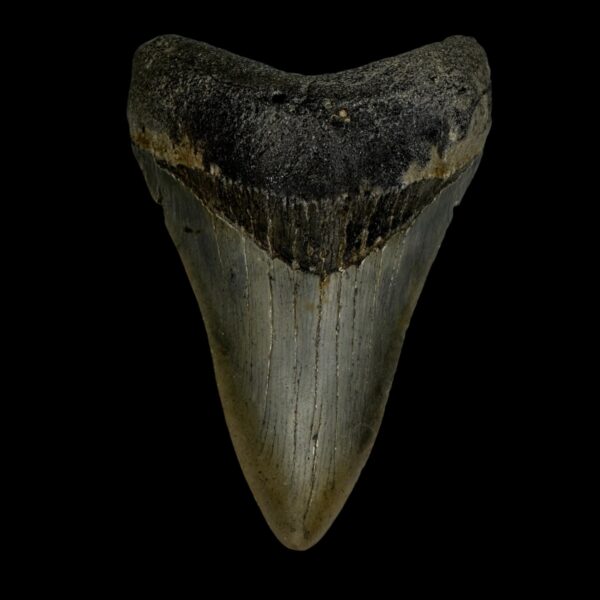
Authentic Megalodon enamel has a specific texture — smooth to the touch but with microscopic patterning that catches light unevenly. Under magnification (a basic 10x loupe works), real enamel shows tiny natural pits, hairline cracks consistent with fossilization, and a subtle color gradient from base to tip.
Replicas, by contrast, often show:
- Uniformly smooth surfaces with no microscopic variation
- Solid uniform color across the entire blade
- A “painted” or sprayed appearance under light
This is the first and most reliable of the proven ways to identify an authentic megalodon tooth fossil.
Check 2: Root Structure and Porosity
The root of a Megalodon tooth is one of the hardest features to fake convincingly. Authentic roots are porous, irregular, and show clear bone-like texture with visible nutrient channels.
Look for:
- Porosity — small holes and irregular surface, not smooth resin
- Asymmetry — natural roots are rarely perfectly symmetrical
- Color variation — patches and tonal shifts caused by mineralization
- Weight distribution — real roots have density that matches the blade
If a root looks “too clean” or feels suspiciously light, it’s almost always a red flag.
Check 3: Weight, Density, and Feel
Real Megalodon teeth are heavy. Millions of years of mineralization replace organic material with denser minerals, giving authentic fossils a weight that surprises first-time buyers.
A useful baseline: a genuine 4-inch Megalodon tooth typically weighs between 180 and 250 grams depending on the formation. If you receive a piece that feels closer to a lightweight resin replica, weigh it and compare against published averages.
This check pairs well with our Ultimate Megalodon Tooth Size Guide for Collectors — knowing the expected size-to-weight ratio across tiers helps you spot anomalies fast.
Check 4: Serrations and Cutting Edges
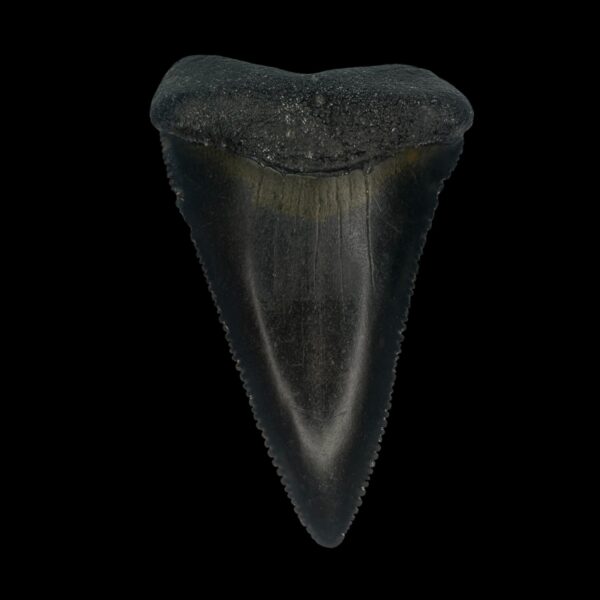
For serrated specimens, the cutting edge is one of the most reliable proven ways to identify an authentic megalodon tooth fossil. Natural serrations have:
- Microscopic irregularity (no two serrations look identical)
- Wear consistent with fossilization
- Color and texture that match the rest of the blade
Replicas almost always get serrations wrong — either too uniform, too sharp (unfaded), or visibly different in color from the blade. For a deeper dive into why serrations matter, see our guide on why serrated megalodon teeth are coveted by collectors.
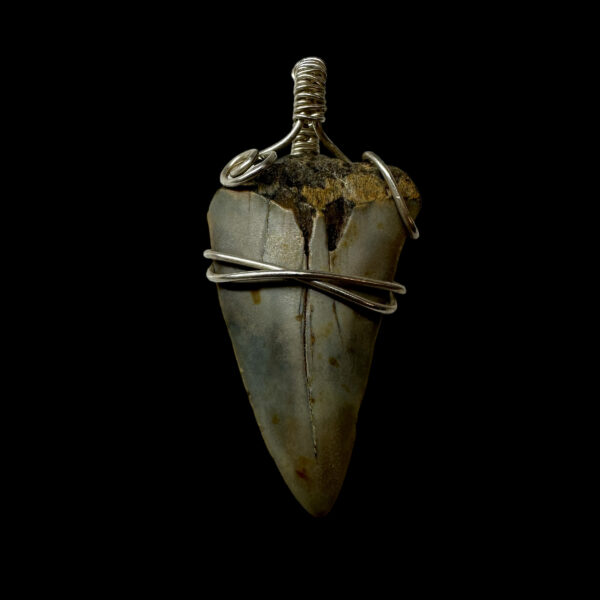
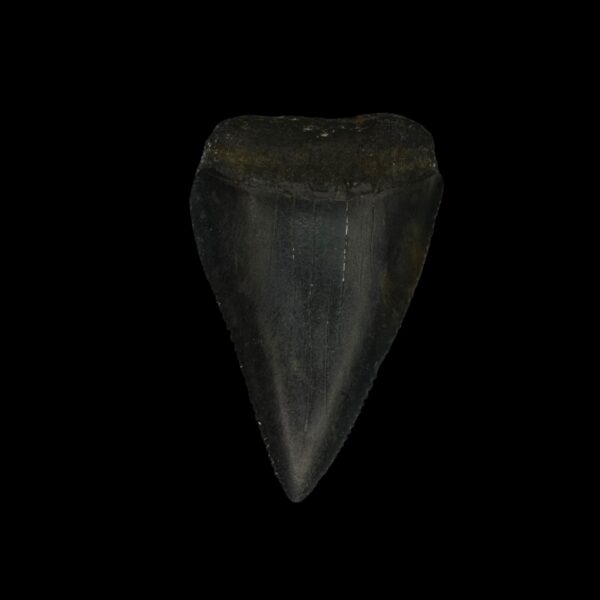
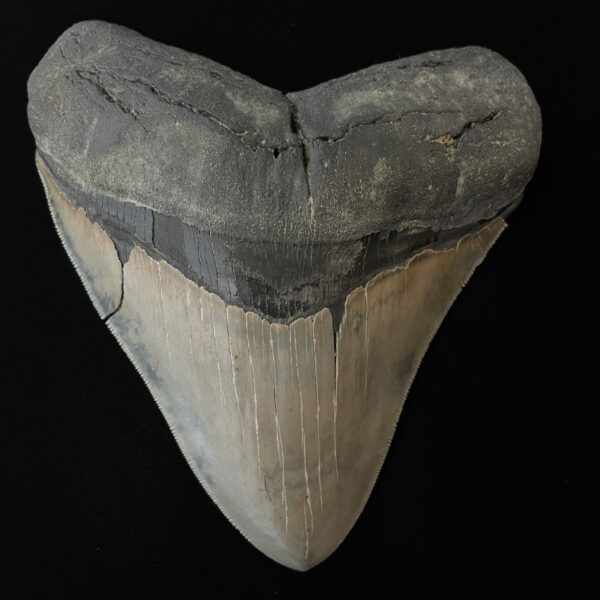
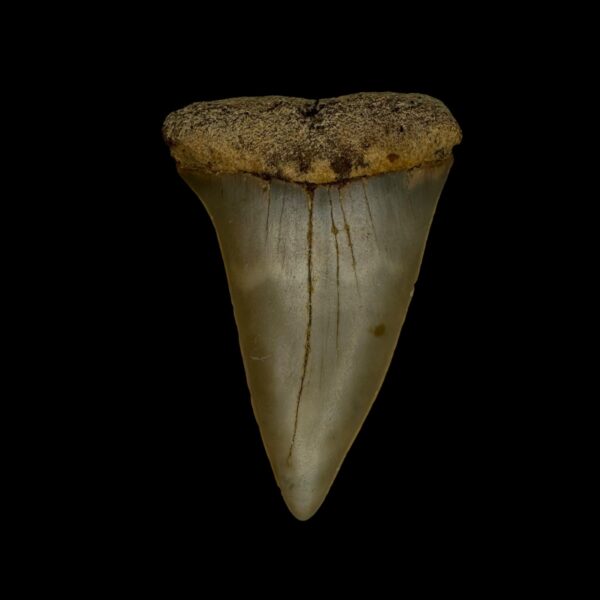
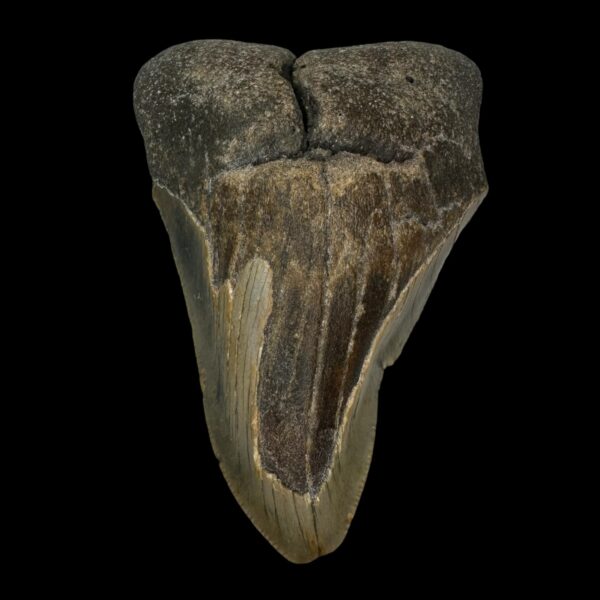
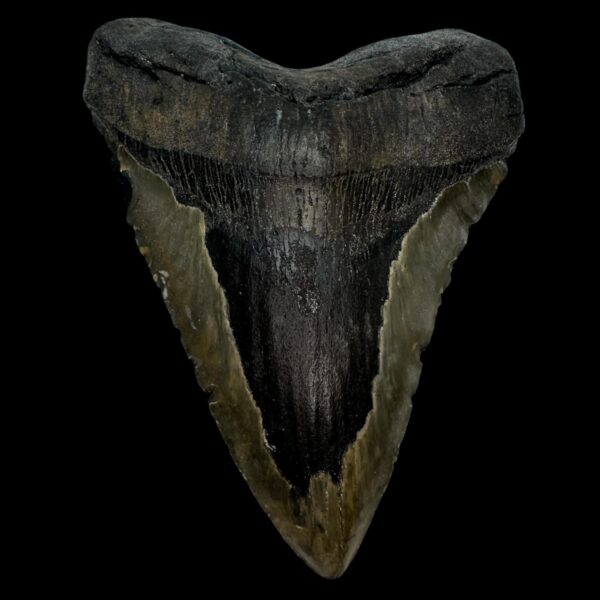
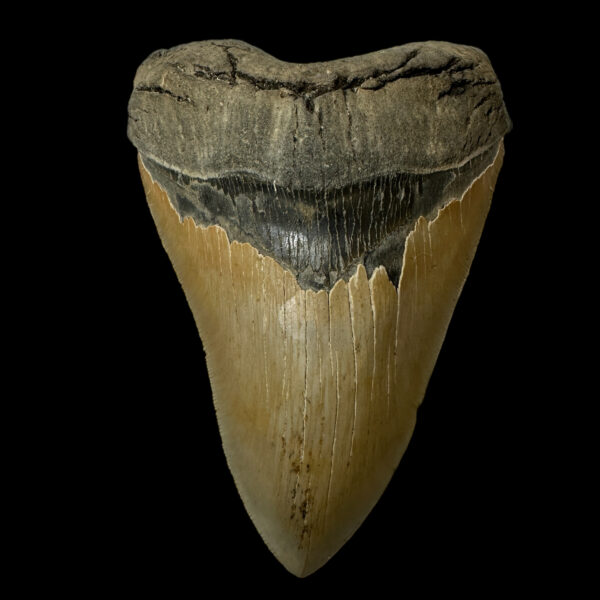
Pieces like the 4.78″ Killer Serrated Megalodon Tooth Fossil and the 4.77″ Fearless Serrated Megalodon Tooth Fossil show what authentic serration preservation actually looks like.
Check 5: Geological Formation and Matrix
Every authentic Megalodon tooth comes from a specific geological formation — places like Bone Valley (Florida), the Calvert Cliffs (Maryland), Morocco’s Khouribga deposits, or coastal South Carolina sites. Reputable sellers always disclose the formation.
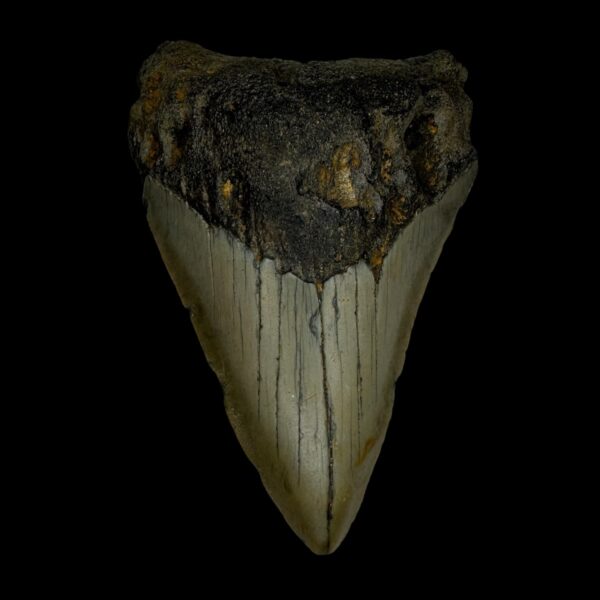
Sometimes traces of the original matrix (the sediment the tooth was buried in) remain on the root or base of the blade. These traces are extremely difficult to fake convincingly because they require sourcing the right sediment type and bonding it naturally.
When buying, ask:
- What formation does this tooth come from?
- Is there documentation linking it to that location?
- Are any matrix traces visible, and do they match the formation?
Check 6: Provenance and Certification
The final and most decisive of the proven ways to identify an authentic megalodon tooth fossil is provenance. A real fossil should come with:
- Seller documentation — receipt, certificate of authenticity, or written provenance
- Formation disclosure — clear naming of the location
- Photographs from multiple angles — including root and blade detail
- Return policy — reputable sellers stand behind authenticity
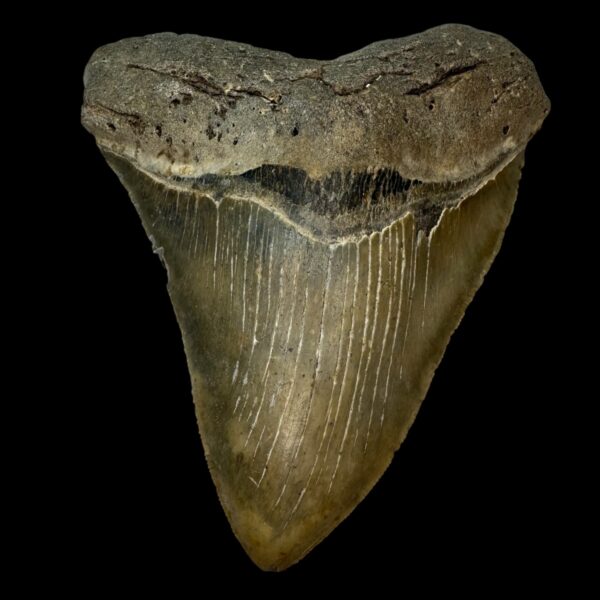
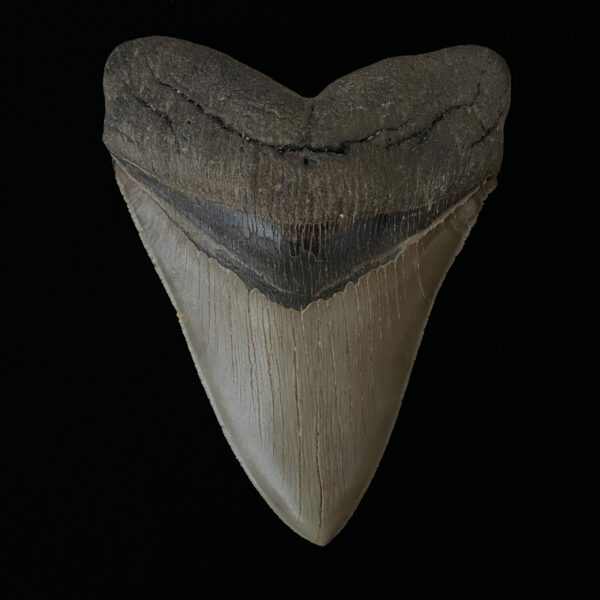
Walk away from any seller who refuses to provide this. At The Fossil Exchange, every authenticated specimen — from the 3.61″ Phenomenal Megalodon Tooth Fossil to the 6.37″ Mighty Megalodon Tooth Fossil — is documented with full provenance.
Putting the 6 Checks Together
The proven ways to identify an authentic megalodon tooth fossil work best when used as a system, not in isolation. A single check might miss a sophisticated fake; six checks applied together catch nearly everything.
Quick workflow:
- Visual inspection (enamel, root, color)
- Physical inspection (weight, density)
- Detail inspection (serrations, matrix)
- Documentation review (formation, certification)
Spend 5 minutes on each step before any purchase above $200, and you’ll dramatically reduce the risk of buying a replica or restored piece.
Final Thoughts
The proven ways to identify an authentic megalodon tooth fossil aren’t secret techniques — they’re the same checks professional dealers apply every day. The difference between a collector who consistently buys real pieces and one who keeps getting fooled comes down to discipline: applying the checks every time, before every purchase, even when the price feels right.
Browse our catalog of fully authenticated Megalodon teeth across every tier, all backed by transparent documentation and the same expert evaluation process described in this guide.