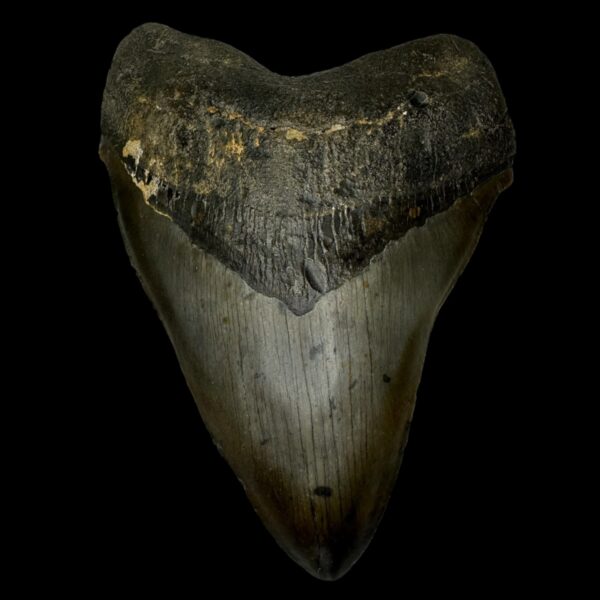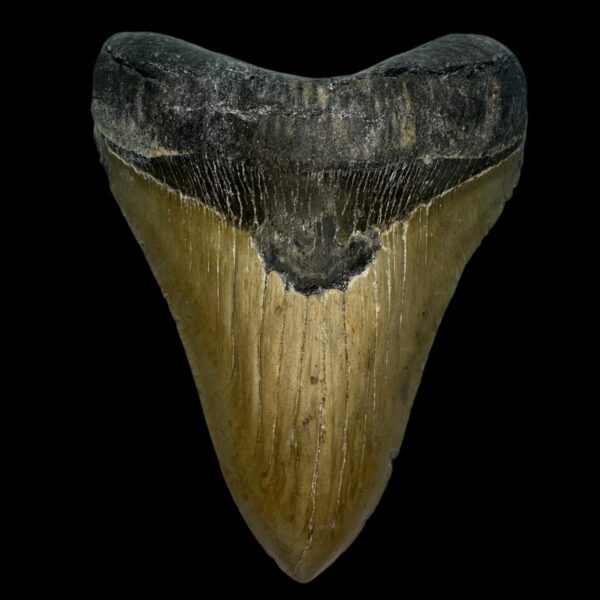
When most people think about Megalodon teeth, they picture a massive prehistoric predator ruling the ancient seas. But these extraordinary fossils are far more than trophies for collectors — they are scientific time capsules. Embedded in the mineral composition, location, and layering of each fossilized tooth is a detailed record of how Earth’s oceans changed over millions of years. In this post, we explore a rarely discussed angle: what Megalodon teeth tell us about prehistoric climate change, ocean temperature shifts, and why the world’s greatest shark ultimately vanished.
Why Megalodon Teeth Are Climate Records in Disguise
Fossilized Megalodon teeth absorb minerals from the sediment layers in which they are buried. Scientists analyze isotopic signatures — particularly oxygen and carbon isotopes — locked inside the enamel and dentine of these teeth to reconstruct ancient ocean temperatures. This field, known as paleoclimatology, uses fossils as proxies for climate data that predates any human record by tens of millions of years.
Each tooth you hold from The Fossil Exchange was once part of a living animal that swam through oceans with very different temperatures, salinity levels, and food chains than what exists today. That context makes every authentic Megalodon tooth not just a collector’s prize — but a window into deep time.
1. The Warm Ocean World Megalodon Thrived In
Megalodon (Otodus megalodon) lived from approximately 23 million to 3.6 million years ago, during the Miocene and Pliocene epochs. During the peak of its reign, global ocean temperatures were significantly warmer than today — some estimates suggest tropical and subtropical waters were 3–7°C warmer than modern equivalents.
This warm, nutrient-rich environment supported enormous populations of whales, seals, and large fish — the primary prey of Megalodon. Fossil teeth recovered from coastal sediment layers in North Carolina, South Carolina, and Florida consistently date to periods of high sea levels and warm ocean conditions, confirming that Megalodon was a creature of warm, shallow coastal seas.
2. How Falling Ocean Temperatures Sealed Megalodon’s Fate
The Pliocene epoch, beginning around 5.3 million years ago, brought dramatic global cooling. The formation of the Antarctic ice sheet accelerated, sea levels dropped, and ocean temperatures plummeted. This cooling had a cascading effect on marine ecosystems:
- Prey migration: Whales and large marine mammals adapted by migrating toward colder polar waters — regions Megalodon’s physiology was poorly suited for.
- Nursery habitat loss: Megalodon is believed to have used warm, shallow coastal waters as nursery grounds. As sea levels dropped and these habitats shrank, juvenile survival rates likely plummeted.
- Food chain collapse: Smaller, cold-adapted predators like the ancestral Great White shark outcompeted Megalodon for the remaining prey in temperate zones.
The youngest confirmed Megalodon teeth — found in sediment layers dating to approximately 3.6 million years ago — correspond almost precisely with the onset of the Northern Hemisphere glaciation. This is not a coincidence. The fossil record tells a story of a giant perfectly engineered for one world, undone by the arrival of another.
3. What Tooth Color Tells Us About Burial Environment
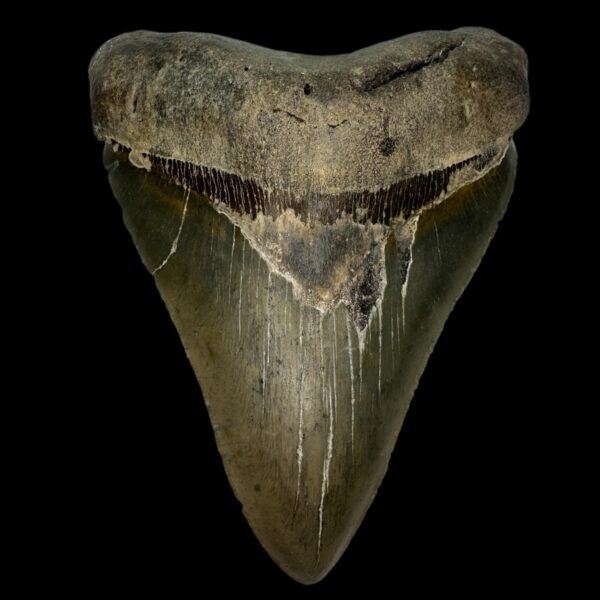
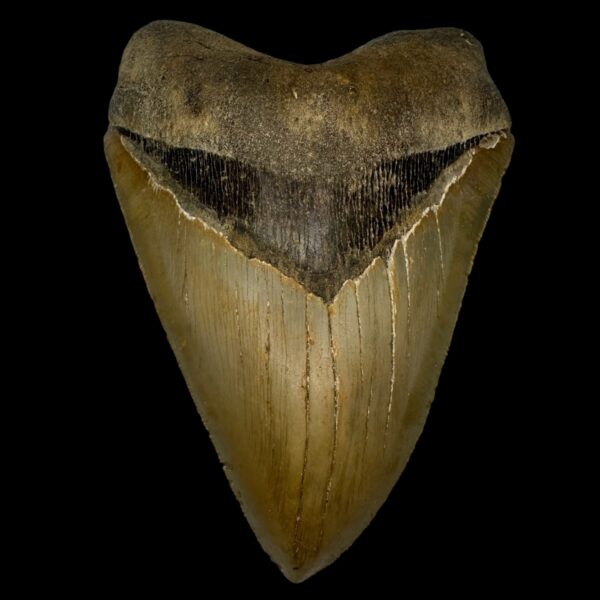
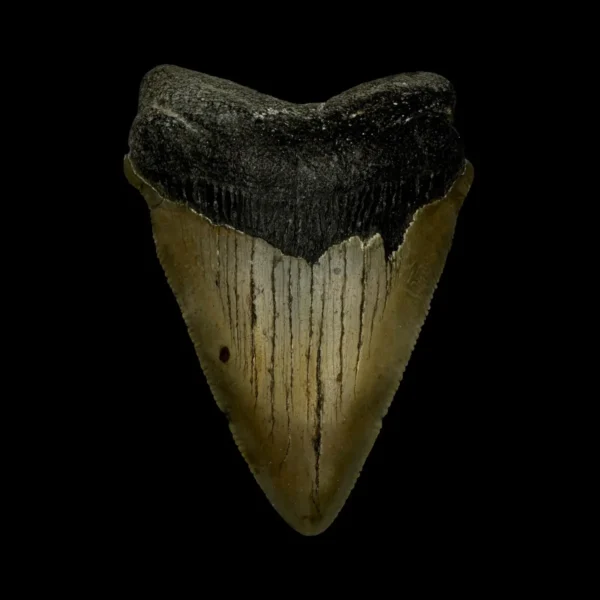
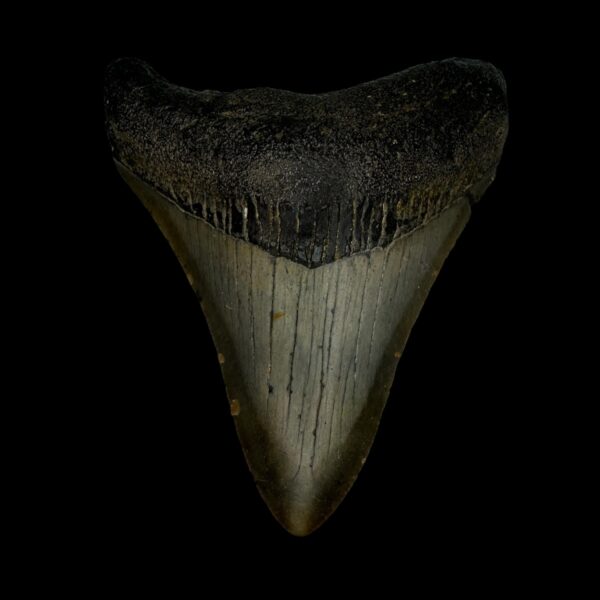
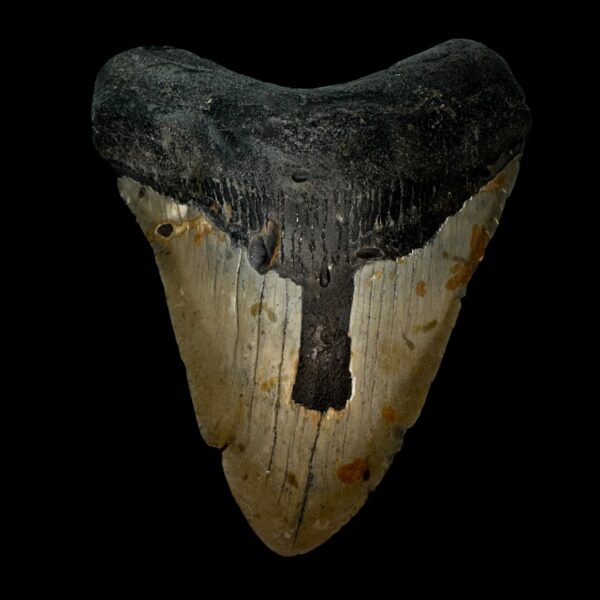
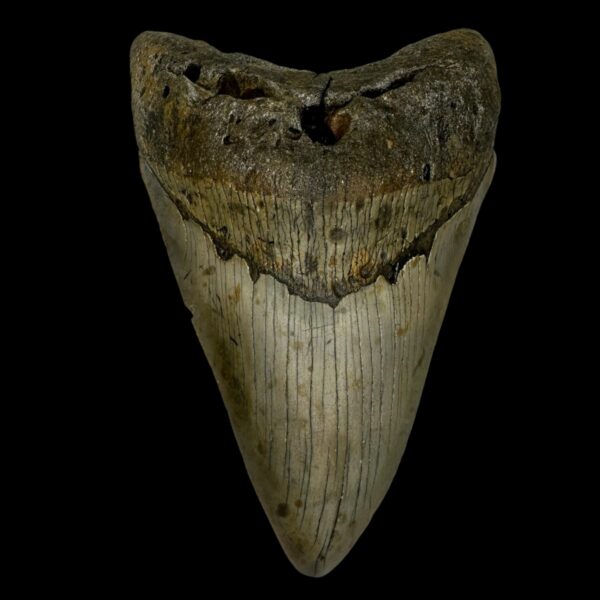
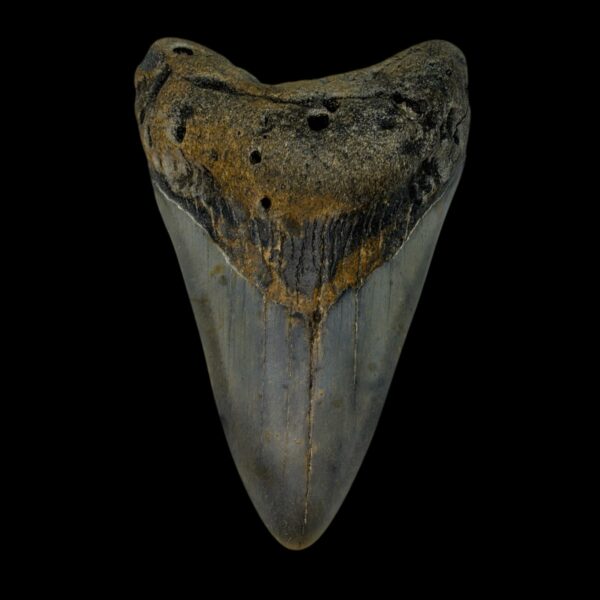
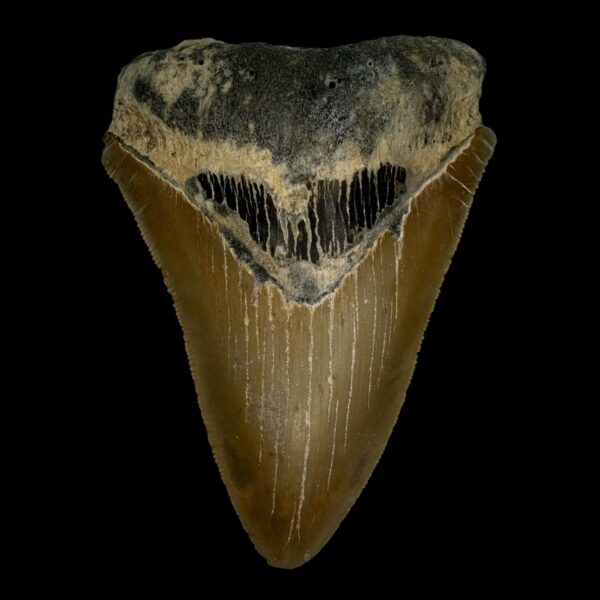
One of the most visually striking things about authentic Megalodon teeth is the extraordinary range of colors — jet black, deep chocolate brown, steel grey, cream, and even blue-green. These colors are not original to the tooth. They are the result of diagenesis — the chemical transformation that occurs as minerals in surrounding sediment replace the original organic material over millions of years.
The specific color of a Megalodon tooth is a direct fingerprint of its burial environment:
- Black teeth are typically found in oxygen-poor, organic-rich river and coastal sediments — common in the rivers of North and South Carolina.
- Brown and tan teeth often come from oxidized, iron-rich sediment layers in inland or shallower deposits.
- Grey and blue-green teeth are frequently recovered from offshore phosphate-rich marine sediments, particularly from deep Atlantic dredging operations.
For collectors, this means the color of your tooth is a geological biography — a record of exactly where and how that tooth spent the last several million years.
4. Megalodon Teeth as Markers of Ancient Sea Levels
Geologists and paleontologists use the depth and stratigraphic layer in which Megalodon teeth are found to reconstruct ancient coastlines and sea levels. Teeth found far inland — sometimes miles from any current coastline — are evidence that those areas were once submerged beneath warm, shallow seas during periods of high global temperatures and elevated sea levels.
In the American Southeast, Megalodon teeth are regularly found in riverbeds, phosphate mines, and coastal dredge spoils — all remnants of the ancient Tethys-connected Atlantic that once covered much of what is now dry land. Each tooth recovered from these locations is a data point in the geological story of a continent slowly emerging from the sea.
5. The Parallel to Modern Climate Change
There is a sobering modern parallel in Megalodon’s story. Today, ocean temperatures are rising again — not due to natural orbital cycles, but at a rate far faster than anything in the Megalodon fossil record. Marine biologists are already documenting shifts in whale migration patterns, changes in prey distribution, and the collapse of coastal nursery habitats for numerous species.
Megalodon’s extinction reminds us that even the most dominant predator in Earth’s history was not immune to climate-driven ecosystem collapse. The fossil record is not just history — it is a warning written in stone, enamel, and mineral.
Own a Piece of This Climate History
Every authentic Megalodon tooth available at The Fossil Exchange is a genuine artifact of this extraordinary story. Recovered from the rivers and offshore waters of the Atlantic coast, each tooth has been authenticated, carefully cleaned, and preserved to museum standards. Whether you are a serious collector, a science enthusiast, or someone who simply wants to hold a piece of deep time, our collection offers something truly irreplaceable.
Browse our current selection of authentic Megalodon teeth for sale and find the specimen that speaks to you — not just as a fossil, but as a record of a world that once was.
Frequently Asked Questions
Can Megalodon teeth really tell us about ancient climate?
Yes. Scientists analyze isotopic signatures in fossil enamel to reconstruct ancient ocean temperatures. The stratigraphic layer in which a tooth is found also reveals information about sea levels and coastal geography at the time of deposition.
Why did Megalodon go extinct?
The leading scientific consensus points to global ocean cooling during the Pliocene epoch, which caused prey migration, loss of nursery habitats, and increased competition from cold-adapted predators like the ancestral Great White shark.
Does tooth color affect the value of a Megalodon fossil?
Color can influence collector preference and rarity, but the primary value factors are size, completeness, serration quality, and overall preservation. Unusual colors from rare geological deposits can add premium value to exceptional specimens.
Where are most authentic Megalodon teeth found?
The most prolific sources are the rivers and offshore waters of North Carolina, South Carolina, Florida, and Georgia in the United States, as well as offshore Atlantic dredging sites. International sources include Morocco, Peru, and parts of Southeast Asia.