Fascinating Facts About Megalodon the Apex Predator
Few creatures in Earth’s history capture imagination like Megalodon — the prehistoric apex predator that ruled the oceans for over 20 million years. From its staggering size to its bone-crushing bite force, fascinating facts about megalodon the apex predator continue to surprise researchers, collectors, and enthusiasts alike.
This guide gathers the 8 best discoveries about Megalodon: facts that explain not just the species itself, but why its teeth remain among the most coveted fossils in the world.
Fact 1: Megalodon Reached Sizes Beyond Any Modern Shark
Scientific estimates based on tooth size place adult Megalodons between 50 and 60 feet in length — with the largest individuals possibly reaching 65 feet. For comparison, the modern great white shark averages 15 feet.
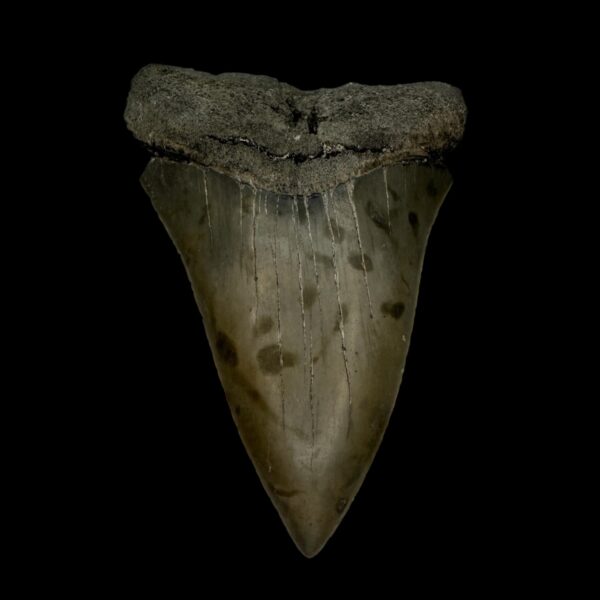
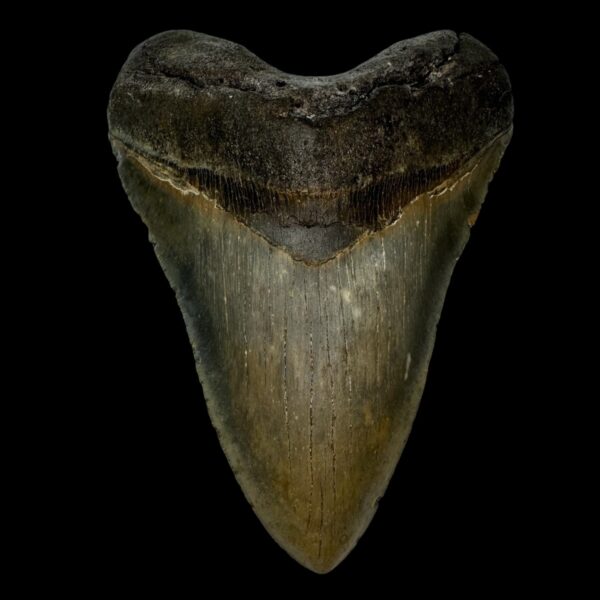
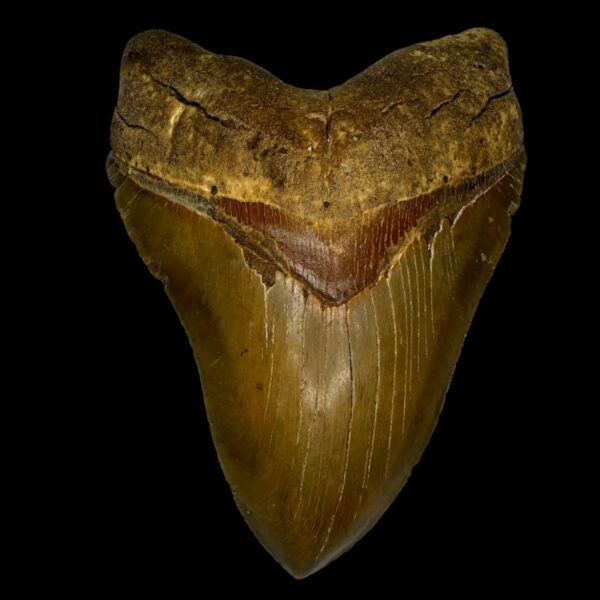
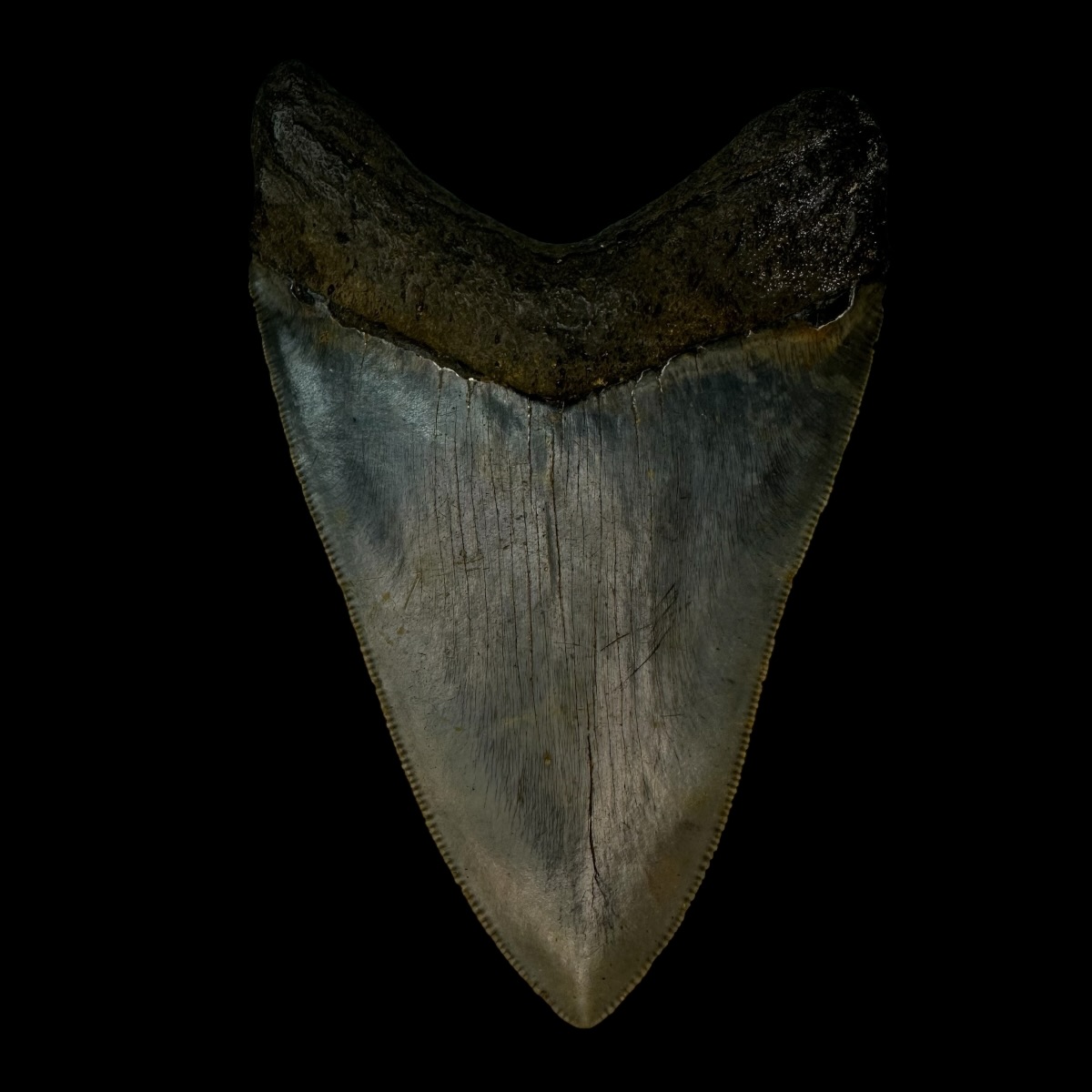
The largest Megalodon teeth recovered, like our 6.37″ Mighty Megalodon Tooth Fossil, are consistent with sharks near the upper end of that size range. Holding a 6-inch tooth means holding a fossil from one of the largest marine predators that ever existed.
Fact 2: Their Bite Force Crushed Whales
One of the most dramatic fascinating facts about megalodon the apex predator is bite force. Modeling studies estimate Megalodon’s bite force at 108,514 to 182,201 newtons — roughly 6 to 10 times stronger than a modern great white, and powerful enough to crush large whale bones.
Their hunting strategy reflected that power: target large whales, attack the rib cage to disable internal organs, then feed at leisure. Fossil evidence of bite marks on whale vertebrae confirms this directly.
Fact 3: Megalodon Hunted Mostly Whales — Not Sharks
Despite popular perception, Megalodon wasn’t primarily a shark-eating shark. Stable isotope analysis of fossilized teeth shows their diet was dominated by large baleen and toothed whales, dolphins, large fish, and occasionally pinnipeds.
This dietary specialization is one of the fascinating facts about megalodon the apex predator that helps explain its decline: when whale populations shifted toward colder waters Megalodon couldn’t follow, its food supply collapsed.
Fact 4: Megalodon Likely Went Extinct Around 3.6 Million Years Ago
The current scientific consensus places Megalodon’s extinction in the late Pliocene epoch, around 3.6 million years ago. Multiple factors contributed:
- Cooling oceans during the Pliocene–Pleistocene transition
- Loss of warm-water prey as whales migrated to polar regions
- Competition from ancestors of the modern great white
- Habitat fragmentation as global currents reshaped
No single cause did it — the combination was decisive.
Fact 5: We Find Teeth, Not Skeletons
One of the most overlooked fascinating facts about megalodon the apex predator: nearly every Megalodon fossil ever recovered is a tooth. Why? Because Megalodon, like all sharks, had a skeleton made of cartilage — not bone. Cartilage rarely fossilizes.
Teeth survive because they’re coated in enameloid — one of the hardest biological materials known. The result: the Megalodon market is essentially a tooth market, and tooth quality determines almost everything.
For collectors deciding which size to pursue, our Ultimate Megalodon Tooth Size Guide for Collectors covers every tier in detail.
Fact 6: Teeth Were Constantly Replaced
A single Megalodon may have grown and shed tens of thousands of teeth over its lifetime. Like modern sharks, they cycled through teeth continuously — losing one and replacing it with the next within days.
This explains why Megalodon teeth are abundant despite the species’ rarity in life. It also explains why a true collector market exists at all — without this biological feature, no fossil supply could sustain itself.
Fact 7: They Lived in Warm, Coastal Waters Worldwide
Megalodon was a globally distributed species during the Miocene and Pliocene. Their fossils have been found on every continent except Antarctica, with major deposits in:
- Bone Valley (Florida) — one of the richest fossil sites in the world
- Calvert Cliffs (Maryland) — known for excellent preservation
- Atacama Desert (Chile) — produces remarkably colorful specimens
- Khouribga (Morocco) — a high-volume export source
Knowing the formation helps verify authenticity — covered in our guide on proven ways to identify an authentic megalodon tooth fossil.
Fact 8: Collecting Megalodon Teeth Is Older Than Modern Paleontology
The final of our fascinating facts about megalodon the apex predator: people have been collecting these teeth for centuries. Renaissance Europeans called them “glossopetrae” — tongue stones — and believed they were petrified serpent tongues. It wasn’t until the 17th century that Danish anatomist Nicolas Steno correctly identified them as shark teeth.
That long collecting history is part of why Megalodon teeth carry such cultural weight. They aren’t just fossils — they’re objects with centuries of human fascination attached.
Why These Facts Matter for Collectors
Understanding fascinating facts about megalodon the apex predator changes how you collect. Once you know:
- The animal’s size — you appreciate what a 6-inch tooth actually represents
- The hunting power — you understand why preserved serrations matter
- The dietary record — you grasp why each tooth has scientific value
- The extinction timeline — you recognize that supply is permanently finite
That framework turns every purchase into a deliberate, informed decision. Whether you start with a 3.61″ Phenomenal Megalodon Tooth Fossil or invest in a 6.22″ Sublime Megalodon Tooth Fossil, context elevates the experience.
Final Thoughts
The 8 fascinating facts about megalodon the apex predator covered here are starting points for a much deeper subject. Megalodon remains one of paleontology’s most studied species, and new research continues to refine our understanding of its biology, behavior, and ecological role.
For collectors, the takeaway is simple: every authentic Megalodon tooth is a window into the most powerful marine predator that ever existed. Browse our authenticated catalog and find the piece that brings 20 million years of prehistoric history into your collection.