Megalodon Tooth Colors – Amazing Insightful 7-Part Guide for Young Learners
provide an exciting way for young learners to understand fossilization, mineral absorption, and the environmental factors that shape fossils over millions of years. This amazing and insightful guide explains how Megalodon teeth develop their wide range of colors, from deep black to bright orange, blue, gray, and even multicolored patterns. Learning about Megalodon tooth colors helps students connect geology, paleontology, and natural history in a fun and accessible way.
How They Form
are not random. Each color reflects the minerals found in the sediment where the tooth fossilized. Because Megalodon shed thousands of teeth throughout its life, these teeth ended up in many environments: rivers, oceans, deep mud, phosphate beds, and mineral-rich sands. The minerals in each environment seep into the tooth over millions of years, creating the unique Megalodon tooth colors we see today.
Megalodon Tooth Colors in Black and Dark Gray Fossils
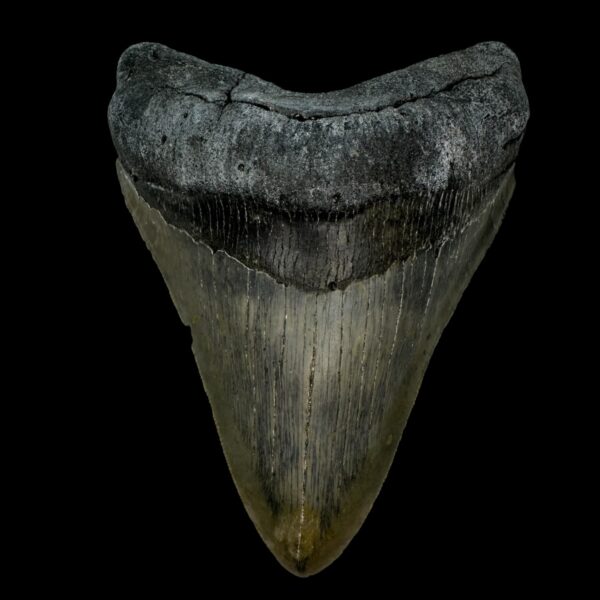
Black and dark gray are the most common, These shades come from iron, phosphate, and organic carbon found in deep marine sediments. Many North Carolina and Virginia fossils show these classic dark colors. Students can observe how polished or matte the black enamel appears, which helps identify whether the fossil spent time in moving water or more stable sediment layers.
Brown and Amber Shades
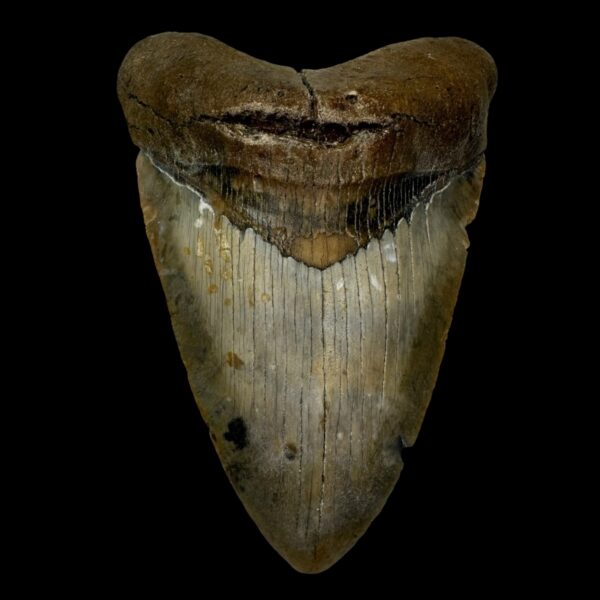
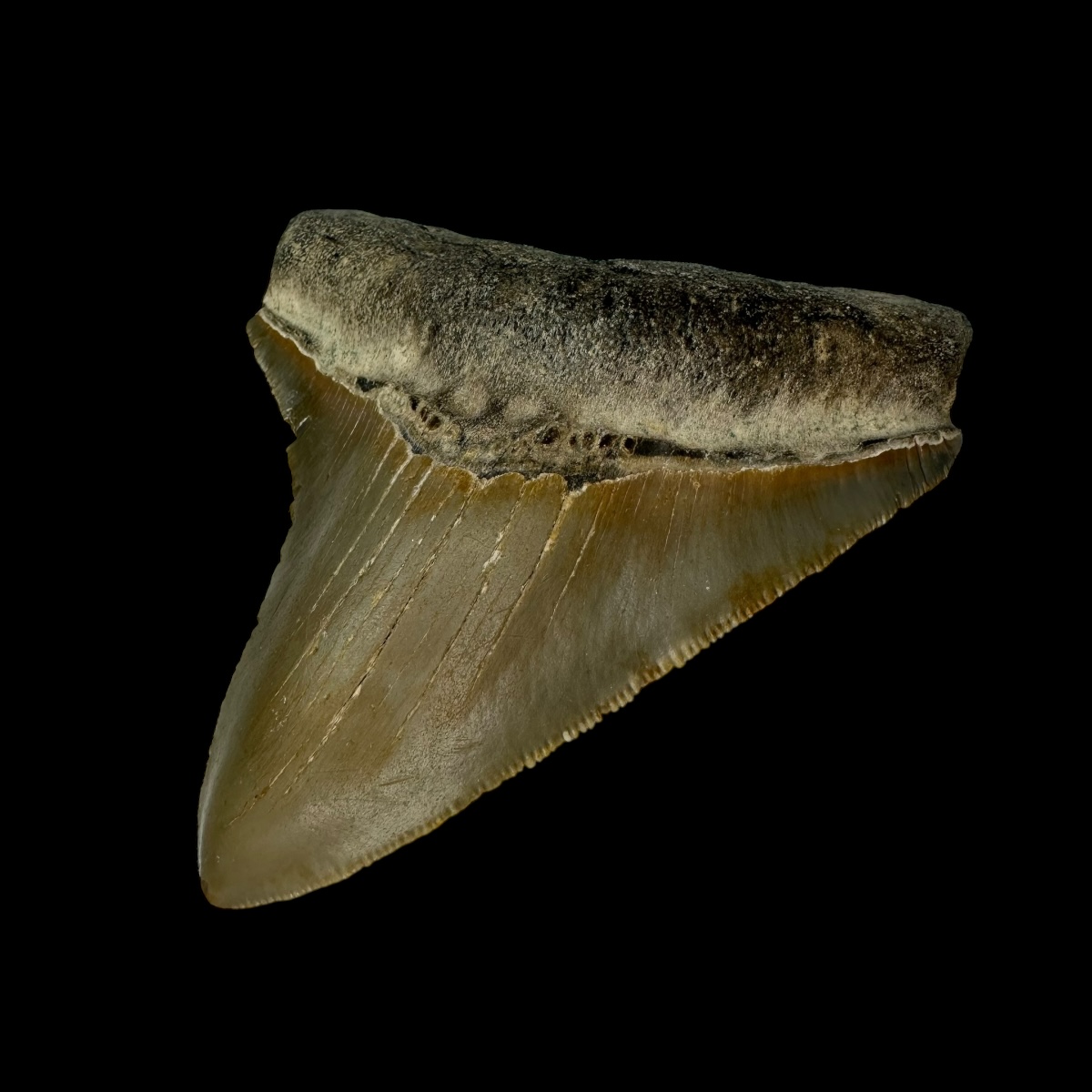
Brown, tan, and amber often come from river fossils, especially in South Carolina and Florida. Minerals such as iron oxide, clay, and silt create these warm tones. These colors can range from light beige to rich chocolate brown. Brown fossils usually show smoother edges because flowing river water rounds serrations and polishes enamel. Comparing brown and black helps learners distinguish between river and ocean fossils.
Megalodon Tooth Colors in Blue and Gray Tones
Some of the rarest and most popular include blue and bluish-gray shades. These colors come from minerals like vivianite and phosphate-rich clays. The famous “Aurora blue” teeth from North Carolina are examples of this unique color category. in the blue range are highly sought after because they form under very specific chemical conditions that do not occur everywhere.
Megalodon Tooth Colors in Orange, Red, and Yellow
Orange, red, and yellow Megalodon tooth colors form when the fossils absorb minerals such as iron oxide, hematite, and limonite. These bright colors are more common in sandy environments with iron-rich layers, such as parts of Florida. Some teeth display multiple shades of orange or red, creating visually striking fossils that help students see how varied sediment layers can be.
Megalodon Tooth Colors in Multicolored Fossils
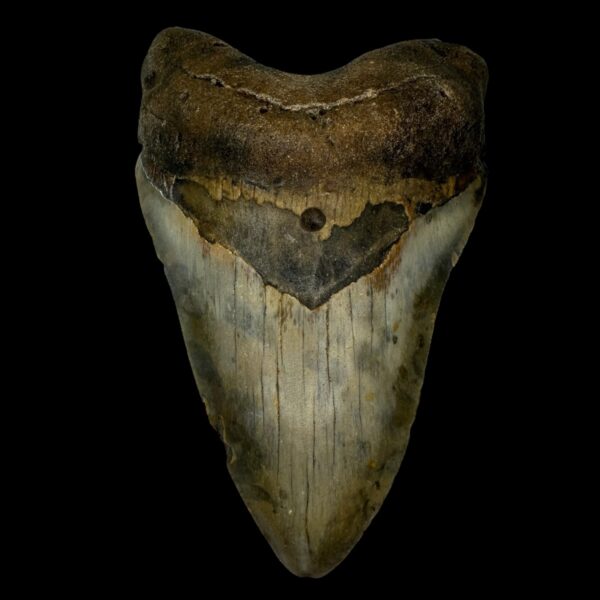
Multicolored occur when a fossil sits in changing environments over long periods. A single tooth might contain black enamel, a brown bourlette, and an orange root. These fossils reveal complex geological histories, such as shifting river channels or varying sediment chemistry. Students love examining these fossils because they tell a story across thousands—or millions—of years.
Why Megalodon Tooth Colors Matter for Education
Studying helps young learners understand geology, sediment chemistry, and fossil formation. By observing tooth colors, students learn to identify mineral types, environmental conditions, and fossilization processes. Megalodon tooth colors offer a hands-on experience that develops scientific thinking through real-world fossil evidence.
Learning about colors also helps learners compare fossils from different regions. North Carolina fossils often appear dark black, Florida fossils show brown or orange, and South Carolina river fossils display smooth textures with warm hues. These comparisons teach students how local geology influences fossil appearance.
Teachers can use to introduce mineralogy, Earth history, and environmental science. Students can sort fossils by color, compare enamel patterns, and discuss what each shade reveals about the fossil’s past. This visual, insightful approach supports curiosity and understanding in a memorable way.